
Part 10 of 43
The Lined Pot
By Madhav Kaushish · Ages 12+
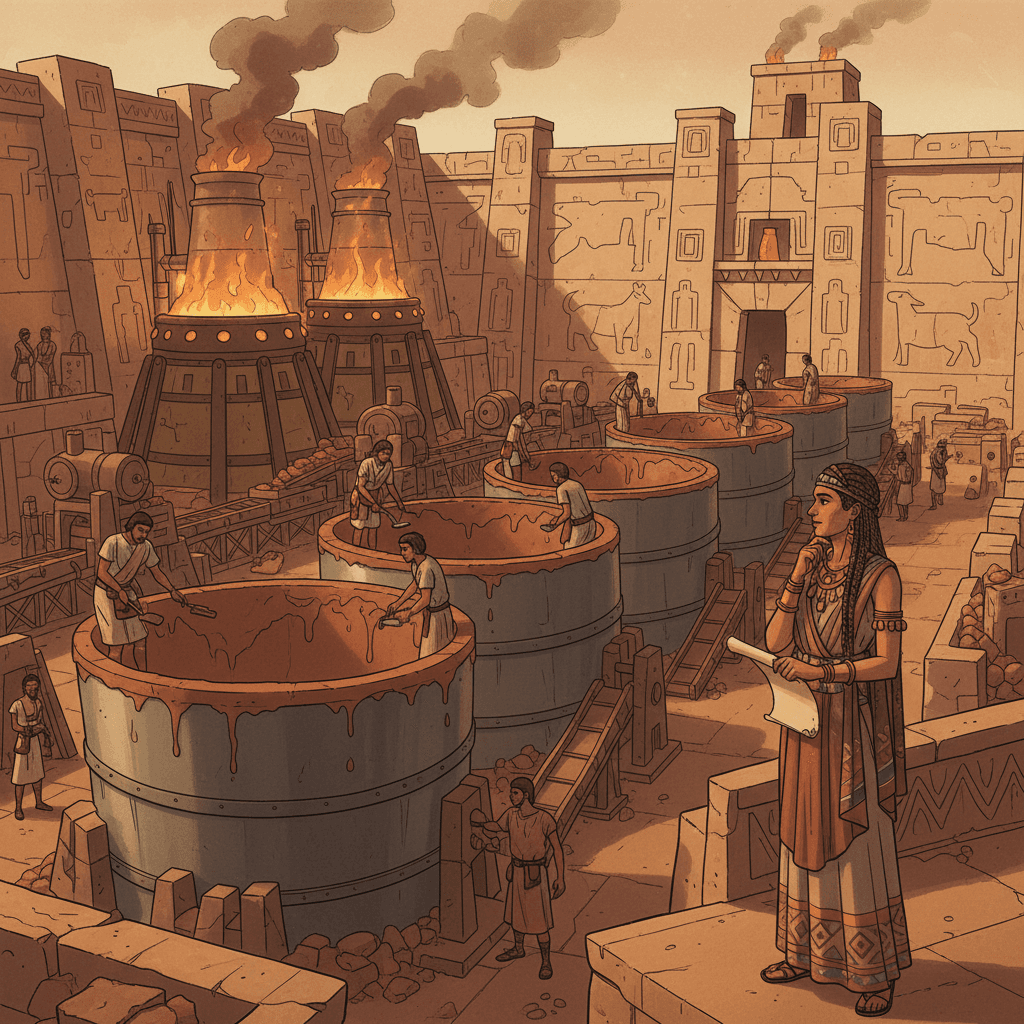
Lomytguya had spent seven years in a dye factory before her arrest. The work involved large vats of acidic liquid used to fix colours into fabric. These liquids were strong enough to eat through metal if given time. And yet the factory used metal vats.
The Factory Solution
"We lined them," Lomytguya said. "Every six months, the vats were coated with a thick layer of clay mixed with animal fat. The coating protected the metal from the acid. As long as the lining held, the vat was fine."
"And when it did not hold?"
"The acid ate through. We would find holes in the bottom of the vat, liquid pooling on the floor. The foreman would scream. We would reline the vat." She paused. "It was not a good job."
Crivsola saw the implication immediately.
The Protective Lining
The tube must be lined with something that protects it from its own dissolving liquid.
The body produced a substance powerful enough to break down food in hours. The walls of the tube were made of the same kind of material as the food — flesh, after all, was not so different from meat. Without some form of protection, the dissolving liquid would attack the tube itself.
So the tube must coat its own walls with a protective layer. Something the dissolving liquid could not penetrate. The body, in effect, lined its own pot.
Evidence from Sickness
Crivsola had treated many patients in her years as a physician. Some of them had complained of a burning pain in the midsection — a sensation they described as feeling eaten from within. In the worst cases, patients passed blood in their waste, and the pain became unbearable.
She had never understood these symptoms. But now they made a dreadful kind of sense.
When the protective lining fails, the dissolving liquid attacks the body itself.
The burning pain was the dissolving liquid making contact with unprotected flesh. The blood was damage to the wall of the tube. These patients were not suffering from some mysterious illness — they were being digested by their own bodies.
A Resolution
This was not a case of proposing a wrong model and correcting it. It was a resolution — the protective lining answered the question of why the body did not dissolve itself. Lomytguya's factory experience had provided exactly the right framework.
Crivsola's model of the food tube was growing more detailed. Mouth, one-way valve, dissolving chamber lined with a protective coating, and waste exiting from below. But a new question was forming.
The dissolving liquid broke food down. The protective lining kept the tube safe. But what was the point? The body did not dissolve food merely to produce waste. If that were all, eating would be an elaborate exercise in futility.
The dissolved food must go somewhere useful. It must somehow get from inside the tube to the rest of the body. But the tube was a closed passage — food went in the top and waste came out the bottom. How did the useful material escape the tube and reach, say, the muscles of the arm or the bones of the foot?
Crivsola suspected the walls of the tube were more interesting than they appeared.