
Part 42 of 43
The Wanted Poster
By Madhav Kaushish · Ages 12+
Crivsola brought her new model to Lomytguya on the next prison visit. The plague had not reached the prison — the walls of Sonhlagot's dungeons were good for something, at least — and Lomytguya listened with the focused attention she always gave to Crivsola's ideas.
"The body has defenders," Crivsola said. "I do not know what they are. But I know what they do. When something attacks — a sickness, an infection at a wound — the defenders respond. They create heat. They create swelling. They fight. And if they win, they remember the attacker. If the same thing returns, the defence is faster and stronger. The person does not get sick again."
Lomytguya thought about this for a while.
The Wanted Poster
"It is like the guards at the city gate," Lomytguya said. "When a criminal escapes from this prison, they post a description at every gate. Height, scars, the shape of the nose. The guards have never seen the criminal before — but they have the poster. If the person tries to re-enter the city, the guards recognise them immediately."
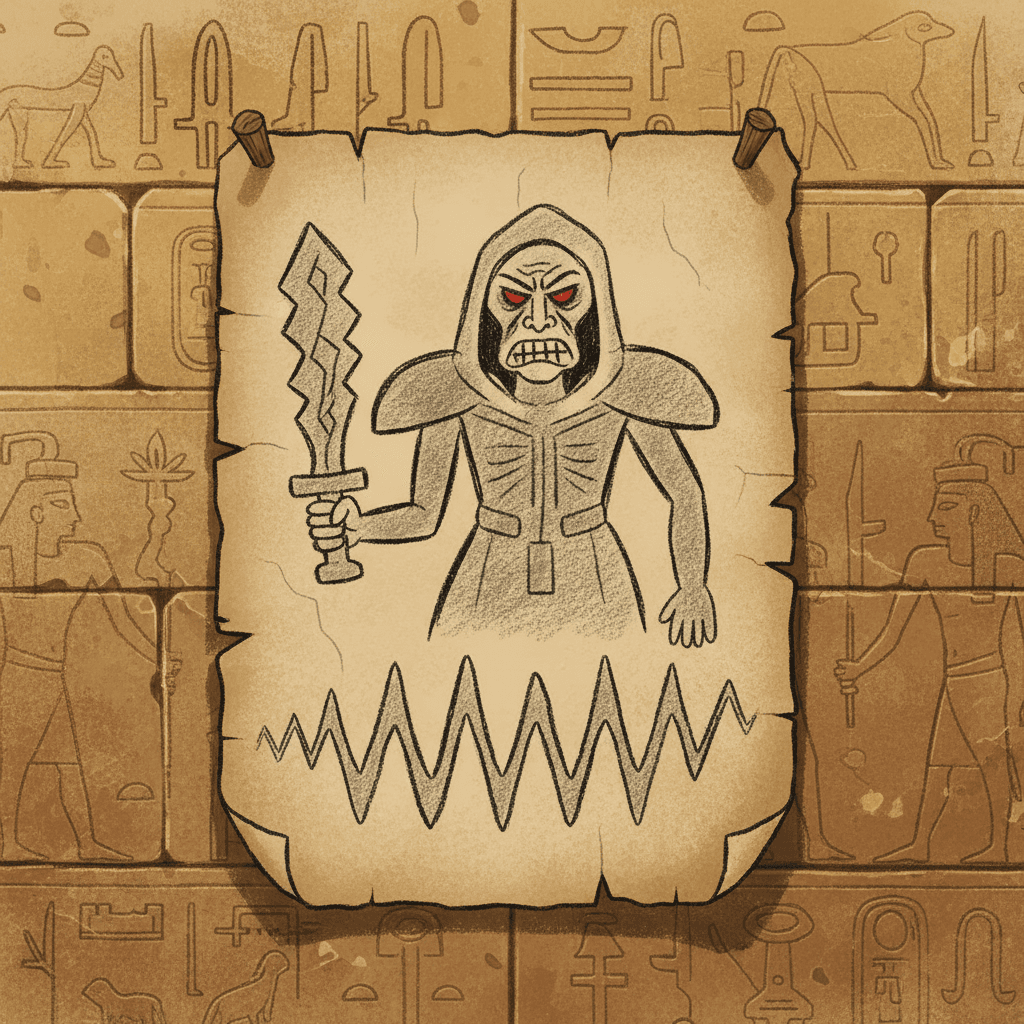
Crivsola considered the analogy. It fit remarkably well. The first time a sickness arrived, the body's defenders did not recognise it. They fought blindly — the fever, the days of misery, the slow and costly battle. But in the course of fighting, they learned what the attacker looked like. They made a record. A wanted poster.
When the same attacker returned, the defenders did not need to fight blindly. They checked the poster. They recognised the enemy at the gate and destroyed it before it could establish itself. No fever. No symptoms. No sickness at all.
The body keeps wanted posters of every enemy it has defeated. That is why survivors are protected — the defenders already know what to look for.
The Mechanism She Could Not See
Crivsola was honest about the limits. She had no idea what the wanted poster actually was. She could not say whether it was something in the blood, something in the flesh, some alteration of the body's rivers or signals. The mechanism was invisible to her.
But the function was clear. Something remembered. Something recognised. Something responded faster the second time. Whatever the defenders were made of, they had a way of keeping records.
The Question
Lomytguya had been quiet for several minutes. She sat on her bench with her hands folded — the same posture she had held during a hundred conversations in this cell. When she spoke, her voice was calm.
"What if you could show the defenders a wanted poster before the criminal arrives?"
Crivsola looked at her.
"You said the body learns by fighting," Lomytguya continued. "It meets the enemy, it suffers, and afterward it has a record. But what if you did not need to wait for the real enemy? What if you could give the defenders something to practice on — something that looked like the attacker but could not actually cause the disease? Then the body would make its wanted poster without ever being in danger. And when the real sickness came, the defenders would already be ready."
The cell was quiet.
What Lomytguya Had Seen
Crivsola turned the idea over. It followed directly from the model. If the defence system learned by encountering an attacker, and if the learning — not the sickness itself — was what created the protection, then you did not need the full sickness. You needed only the encounter. Something that triggered the defenders without overwhelming them. Something that taught the body what to look for.
It was not a leap. It was a deduction. If you understood how the body's memory worked, you could use it on purpose.
"You are describing something extraordinary," Crivsola said.
"I am describing something obvious," Lomytguya said. "Once you drew the picture, the conclusion was already there. I just read it."
Crivsola walked home through streets where the plague was finally loosening its grip. Survivors moved carefully through the evening light, gaunt but upright. Their bodies had fought and remembered. They were safe now — at the cost of weeks of suffering.
Lomytguya's question hung in the air. What if the remembering could come without the suffering?