
Part 5 of 18
The Newspaper Trail
By Madhav Kaushish · Ages 12+
Over the next few days, Wrinje developed a habit that Vilila found increasingly alarming. Every morning, before eating breakfast, he would grab the newspaper from the doorstep and flip directly to the crime section. Most twelve-year-olds want the comics. Wrinje wanted the murder updates.
Vilila: You know, when I was your age, I read about football.
Wrinje: Football is boring.
Vilila: Murder is not a hobby, Wrinje.
Wrinje: I am not treating it as a hobby. I am treating it as a puzzle.
Vilila: Those are the exact words that serial killers use in films.
Wrinje ignored her. The newspaper had something new today.
The article reported that a local shopkeeper named Hyjop had come forward as an eyewitness. Hyjop ran a small provisions store two streets from Glerna's house. He claimed that on the evening of the murder, at approximately 7pm, he saw Jansu walking toward Glerna's house.
This was significant. Jansu had told the police she left Glerna's house at 5pm and went home. If Hyjop was telling the truth, Jansu had lied.
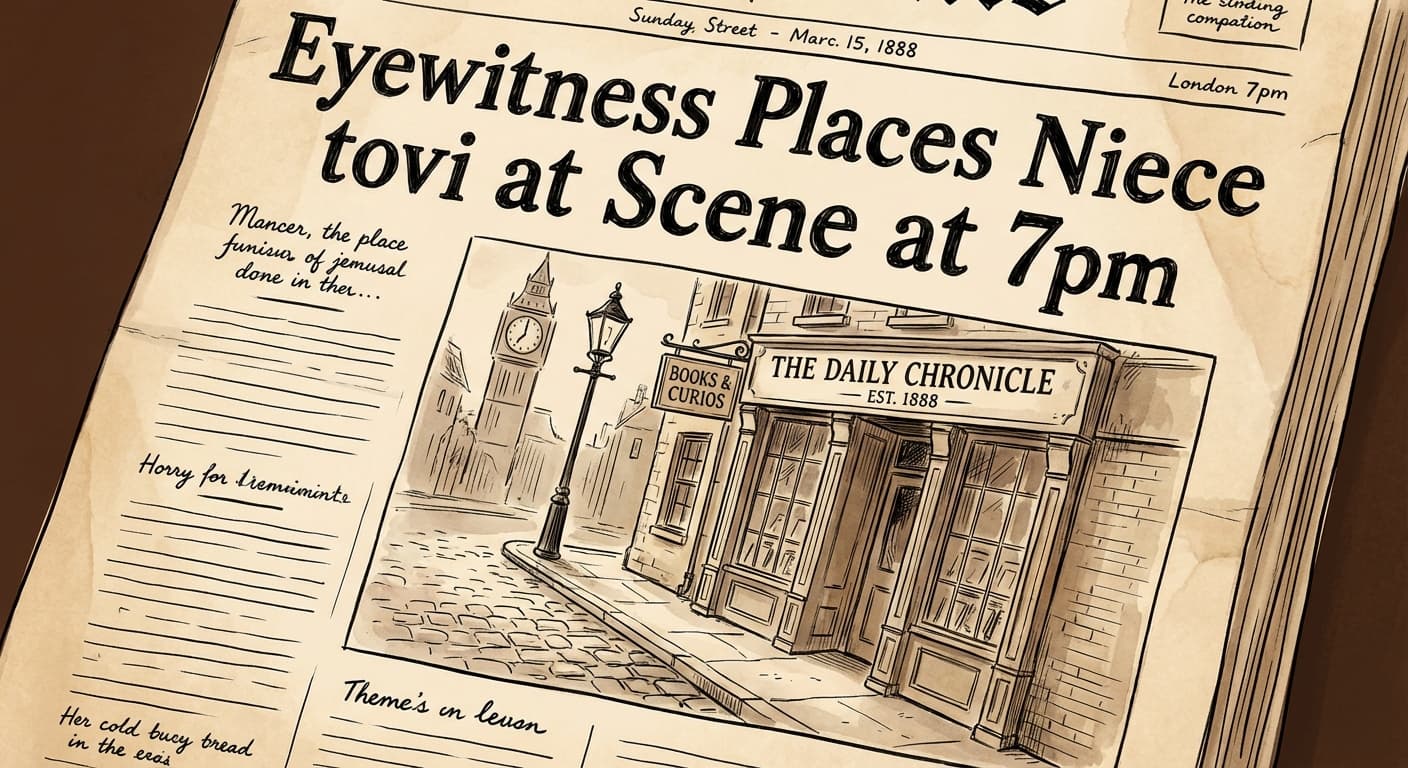
Wrinje: Mum, look at this.
Vilila: What?
Wrinje: A shopkeeper says he saw Jansu near Glerna's house at 7pm. But Jansu said she left at 5pm.
Vilila: So she lied.
Wrinje: That is what it looks like.
Vilila: I told you. She did it. Can we stop investigating now?
Wrinje: You keep jumping to conclusions.
Vilila: And you keep refusing to accept the obvious. A witness saw her there. She lied about leaving. What more do you want?
Wrinje had to admit this felt different from the earlier evidence. Being the last known visitor was one thing — it could be innocent. But being seen at the house two hours after you claim to have left? That was hard to explain away.
He thought about what Glagalbagal had taught him. The question was: how much more likely is this evidence if Jansu is guilty compared to if she is innocent?
If Jansu committed the murder at, say, 7pm, then being seen walking toward the house at 7pm is exactly what you would expect. Very likely.
If Jansu is innocent and really did leave at 5pm, then being seen at 7pm near the house is strange. Not impossible — maybe she came back to retrieve something she forgot, maybe Hyjop is mistaken — but unlikely.
So this evidence was strong. Much stronger than the arrest or even being the last known visitor.
Wrinje: I think the probability just went up a lot.
Vilila: The probability. Listen to yourself. A woman is dead, Wrinje.
Wrinje: I know that. But if we are going to figure out who did it, we have to think clearly.
Vilila: You sound like your cousin with the limes.
Wrinje: Maybe that is not a bad thing.
He sat at the kitchen table and tried to reason through it. Before this, he had estimated — following Glagalbagal's framework — that the probability of Jansu being guilty was still fairly low. Maybe a few percent, accounting for her being an acquaintance and the last known visitor. But this new testimony seemed to push it much higher.
The only thing that nagged at him was a question he could not yet answer: how reliable was Hyjop? The man ran a provisions store. He had no reason to lie. But then again, people make mistakes. They misremember. They see what they expect to see.
Wrinje decided he would ask Glagalbagal about this the next time he saw her.