
Part 1 of 39
Introduction
By Madhav Kaushish · Ages 10+
Glagalbagal was a very intelligent shepherd who lived thousands of years ago. He had a herd of sheep and cattle in an enclosed area. His assistant, a sheep-dinosaur named Blortz, would herd the animals out to graze during the day and return them each evening.
The Problem
Glagalbagal noticed that his herd appeared to be getting smaller.
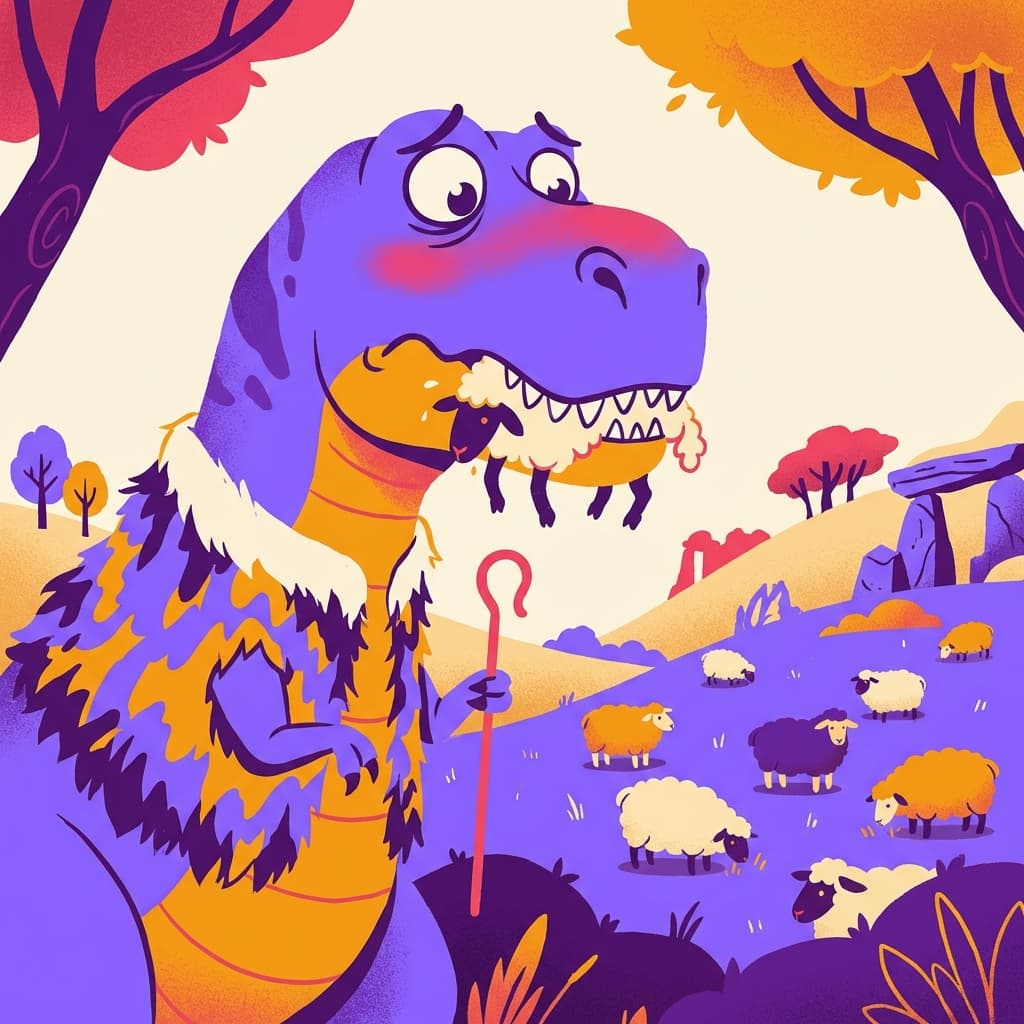
When he questioned Blortz, the sheep-dinosaur denied any change. Glagalbagal could not follow the herd himself because of a knee injury, so he needed to devise a system to keep track of his animals.
The Pebble Solution
Glagalbagal did not know numbers — nobody did at the time. But he came up with an ingenious system using pebbles. He placed a large collection of pebbles in a box. As each animal exited the enclosure in the morning, he moved one pebble from the box to a basket. When the animals returned in the evening, he removed one pebble from the basket for each animal that came back.
If the basket was empty at the end, all animals had returned. If pebbles remained in the basket, some animals were missing.
The Truth About Blortz
The system revealed that Blortz had been dishonest — animals were indeed going missing. Glagalbagal hired a velociraptor spy to follow the herd, and the spy confirmed that Blortz had been eating the animals while they were out grazing.
Though he forgave his loyal companion (Blortz had been with him since childhood), Glagalbagal maintained strict accounting from then on.
Success and a New Problem
With careful records, Glagalbagal's herd grew substantially. But managing vast quantities of individual pebbles became unwieldy. He needed a better system.
The Base-8 System
Glagalbagal developed a hierarchical system. When eight pebbles had been transferred to the basket, he would move a small rock to a bowl and put the eight pebbles back. Each small rock represented what eight pebbles had represented. He eventually added boulders (each worth five rocks) and obelisks (each worth four boulders).
But there was a problem with this system too. Managing all these heavy objects — pebbles, rocks, boulders, and obelisks — required hiring ten triceratopses. Unfortunately, their incompetence caused significant livestock losses. Glagalbagal needed a better approach.