
Part 7 of 43
The Grinding Hypothesis
By Madhav Kaushish · Ages 12+
Crivsola already knew one thing the body did to food: the teeth crushed it. You could watch this happen. Bread entered the mouth as a chunk and was mashed into a soft paste before being swallowed.
Perhaps the rest of the tube did the same thing — just more thoroughly.
The Grinding Model
"What if the tube simply crushes the food further and further?" Crivsola proposed. "The teeth begin the work. Then the tube continues — grinding, pressing, squeezing — until the food is reduced to tiny particles. The useful bits pass into the body somehow, and the rest comes out as waste."
This was the grinding model. The body as a mill. Food in, crushed material out.
It had a certain elegance. Crivsola had seen grain mills in operation — large stones rotating against each other, turning wheat into flour. Perhaps the body contained similar crushing surfaces along the length of the tube.
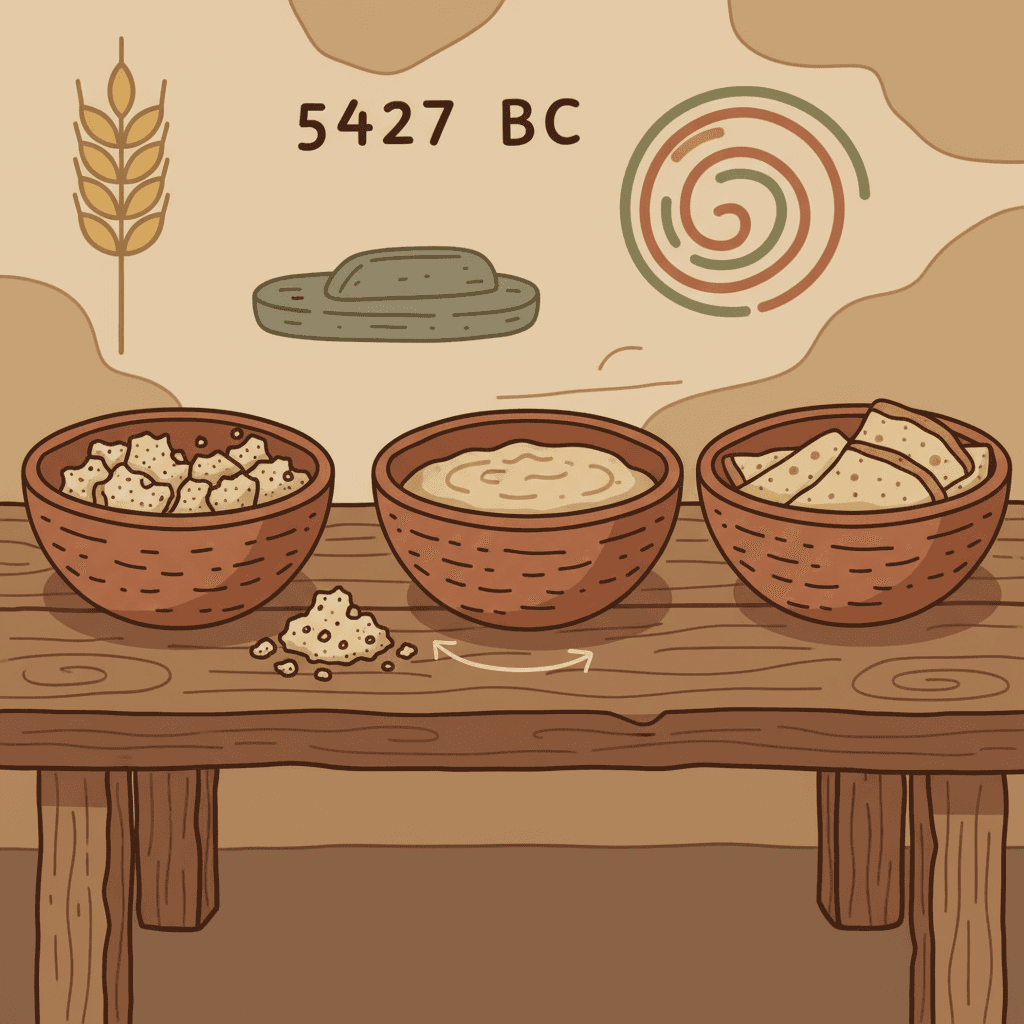
Lomytguya's Objection
Lomytguya, who had been listening while stretching her back against the cell wall — a routine she maintained from her factory days — spoke up.
"Crumbs," she said.
Crivsola waited.
"When you crush bread, you get crumbs. Small pieces of bread. They look like bread. They smell like bread. If you crush them further, you get smaller crumbs. Still bread." Lomytguya paused. "What comes out of us does not look, smell, or in any way resemble bread. Not even very small bread."
Crivsola opened her mouth to respond, then closed it.
Lomytguya was right. Crushing something into smaller pieces produces smaller versions of the same thing. Flour still looks and smells like grain — it is just finer. But what left the body bore no resemblance whatsoever to what entered it. The colour was different. The texture was different. The smell was — comprehensively different.
Two Kinds of Change
This forced Crivsola to draw a distinction she had not previously considered. There were two fundamentally different kinds of change:
Breaking something into smaller pieces — where each piece is still the same substance, just smaller. Crumbs of bread are still bread.
Changing something into a different substance entirely — where the result is no longer the original material in any recognizable form.
The body was doing the second kind. Food was not merely being crushed. It was being converted into something else.
A Harder Question
The grinding model was wrong — or at least, deeply incomplete. Crushing might be part of what happened, but it could not be the whole story. Something inside the tube was transforming food into an entirely different substance.
But what kind of process could do that? Crivsola had never seen anything turn bread into — well — into what came out the other end. She needed an analogy. Some process she had observed in the world that turned one substance into another.
She would not have to wait long. The answer came the next morning, delivered by an extremely angry cook.