
Part 12 of 18
The Hair
By Madhav Kaushish · Ages 12+
The forensic reports kept trickling out through the newspaper, which seemed to be treating the murder as a serialized entertainment rather than a tragedy. The latest revelation: a hair had been recovered from Glerna's clothing, near the wound site. DNA analysis showed it did not match Glerna and did not match Jansu.
Wrinje was delighted.
Wrinje: The hair does not match Jansu. She did not do it.
Vilila: Since when are you on her side?
Wrinje: I am not on anyone's side. I am following the evidence. And the evidence says someone else's hair was on the body. Someone else was close enough to Glerna to leave a hair on her. That means someone else killed her.
He called Glagalbagal, expecting congratulations. He did not get them.
Glagalbagal: You are making a mistake.
Wrinje: How? The hair is not Jansu's. It is someone else's. That someone else was close to Glerna when she was attacked.
Glagalbagal: Maybe. Or maybe that hair got there earlier in the day. Or the day before. Or during any of the countless interactions Glerna had with other people. A hair on clothing does not mean the person was there during the murder. People shed hairs all the time.
Wrinje: But it was near the wound.
Glagalbagal: The wound was on her head. People also have hair on their heads. Glerna could have hugged someone earlier that day, and a hair transferred to her collar, which is near her head. You are assuming the hair got there during the murder, but you do not actually know that.
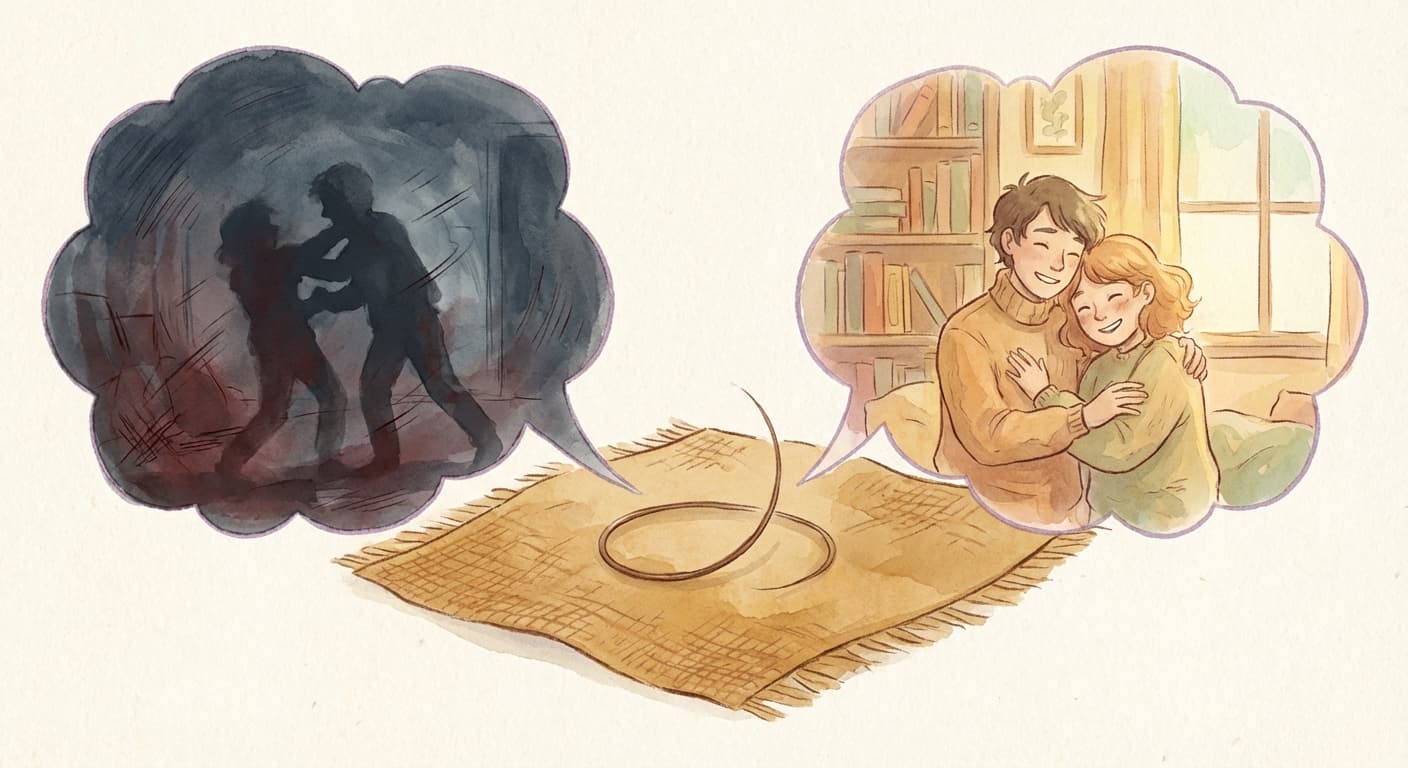
Wrinje: Fine. But even so, does it not at least reduce the probability that Jansu did it?
Glagalbagal: A little, yes. Let us think about it properly. If Jansu is guilty and committed the murder, what is the chance of finding someone else's hair on Glerna? It is not zero — Glerna interacted with many people, so there could easily be other people's hairs on her clothing regardless. Let us say that chance is 50%.
Wrinje: And if Jansu is innocent and someone else did it?
Glagalbagal: Then you would expect that other person to have been in close contact with Glerna, so the chance of finding an unknown hair is higher — maybe 80%.
Wrinje: So the evidence is more likely if Jansu is innocent. That means it shifts the probability away from Jansu.
Glagalbagal: It does. But by how much? The ratio is 50% to 80%. That is not a dramatic shift. It nudges the probability, it does not flip it.
Wrinje: So it is not proof of innocence.
Glagalbagal: No. And this is an important distinction. Exclusion — the hair does not match Jansu — is not the same as proof of innocence. It means one particular piece of physical evidence does not connect to her. But she could still be guilty if other evidence points to her. Similarly, if the hair had matched Jansu, it would not have been proof of guilt — she is the niece, she may have hugged her aunt that day.
Wrinje: Everything in this investigation seems to be "it shifts the probability a little bit in one direction."
Glagalbagal: Welcome to real reasoning. In detective stories, there is always a single clue that cracks the case. In reality, each piece of evidence nudges the probability. The answer comes from many nudges accumulating.
Wrinje: What about the DNA itself? The newspaper says they are trying to match the hair to someone. How reliable is DNA matching?
Glagalbagal: DNA matching is far more reliable than fingerprint matching. The random match probability — the chance that two unrelated people have the same DNA profile — is typically 1 in several million or even billions, depending on how many markers are tested.
Wrinje: So if the DNA matches someone, it is basically certain?
Glagalbagal: The match itself is very reliable. But you still have the same database problem we discussed with fingerprints, just on a smaller scale. If you search a database of a million people and the random match probability is 1 in a million, you would expect about one coincidental match. So even DNA is not absolute proof without additional evidence.
Wrinje: But it is much stronger than a fingerprint match.
Glagalbagal: Much stronger, yes. Especially when combined with other evidence. A DNA match on a murder weapon belonging to someone who had motive and opportunity — that is very compelling. A DNA match alone, from a database search, with no other connection? That still needs corroboration.
Wrinje: I need to find out whose hair that is.
Glagalbagal: So does the police. But remember — even if you find out whose hair it is, that does not automatically tell you who the killer is. It tells you who was in contact with Glerna, which may or may not be the same thing.
Wrinje: This is harder than I thought.
Glagalbagal: Yes. And it should be. You are trying to figure out who killed someone. If it were easy, there would be no wrongful convictions.